A Palm Harbor homeowner showed us four estimates for the same roof, and the numbers ran thousands of dollars apart. She assumed someone was cheating her. Nobody was. Three of the four were honest documents. They just weren’t describing the same roof.
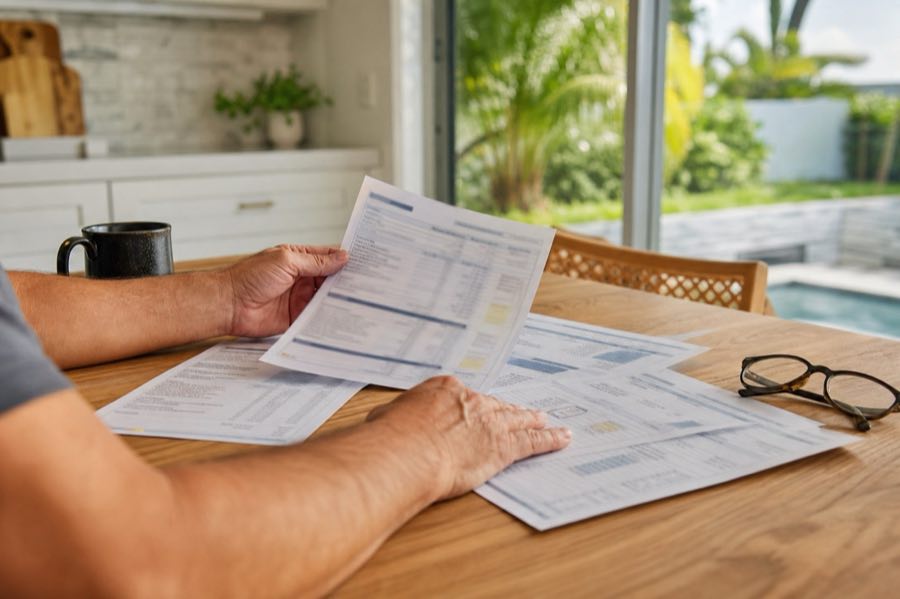
Why quotes for the same roof can differ by thousands
A roofing estimate is a stack of decisions wearing a single number. Tear-off or overlay. A self-adhered secondary water barrier or the bare code minimum. New flashing or “reuse existing.” Fastening to Florida Building Code or whatever is fast. Each decision moves the price quietly, and the cheapest quote is usually the one that made every call in its own favor without telling you.
The fix isn’t finding the “real” price. It’s making every bid answer the same questions, in writing, so you can compare apples to apples.
The line items that must be there
- Tear-off, named and priced. If you see the word “overlay,” or worse, nothing at all, ask. An overlay buries the decking, the one thing your new roof stands on, and it rarely satisfies a Florida insurer.
- Decking and plywood allowance. Nobody can see the sheathing under old shingles or tile. What’s the per-sheet price after the surprise? It belongs on the page now, not negotiated at 2pm on tear-off day.
- Underlayment & secondary water barrier. A self-adhered secondary water barrier is what keeps wind-driven rain out if the surface ever lifts. The estimate should name the product, not just say “per code.”
- Fastening and wind mitigation to Florida Building Code. Nail pattern, ring-shank nails, and re-nailing the deck all feed your wind mitigation report and your insurance premium. It should be spelled out.
- Flashing: new or reused. Reused flashing is the most common source of leaks on a brand-new roof. The estimate should say new, and say where.
- Ventilation math. Ridge vent, solar fans, or roof vents mean nothing without matching soffit intake. Look for intake and exhaust both.
- Inspection, cleanup, and magnet sweep. The required inspections, a dumpster, tarps over the landscaping, and a magnet sweep for nails. Small lines, but their absence becomes your problem in week two.
Four questions that surface everything
Ask these of every bidder, and ask for the answers in writing. Honest outfits will enjoy answering. The others will get vague, which is just as useful to know.
- “What happens if you find rotten or soft decking?” You want a unit price and photos before anything gets replaced, not a change-order ambush.
- “What does the warranty actually cover?” There are two: a manufacturer-backed materials warranty from the factory, and a written workmanship warranty from the installer. Get both on paper and read what voids them.
- “What are the payment terms?” Ask about the deposit, the schedule, financing, and whether they offer a pay-at-close option if you’re selling the house. Vague money terms age badly.
- “Can I see your license and certificate of insurance today?” A Florida State Certified Roofing Contractor has the license number and a current COI with your address ready before you finish the sentence. Ours is CCC0000000.
Reading the silences
The most expensive words in a roofing estimate are the ones that aren’t there. “Allowance” means the number will move. “TBD” means it already has. And a bid that comes in 30% under everyone else isn’t a bargain. It’s a list of things you haven’t been told yet, scheduled to introduce themselves right around hurricane season.
Take the time to compare properly, line by line, apples to apples. A good roof is a long decision, and no honest contractor will pressure you into it before dinner. We’re a family-owned, local company, and we’ll hand you a free itemized estimate you can actually read. When a repair beats a replacement, we’ll tell you that too. Questions? Call us at (727) 555-0147.